CONNECTING MINDS.
EXPANDING HUMANITY.

Our vision: Restoring mobility to the paralyzed, sight to the blind, hearing to the deaf, and speech to the mute.

The Future of Neuroscience

The Story

Brain-computer interfaces are still in their infancy, but the initial successes exceed anything even experts could have imagined. Blind people are experiencing their first visual impressions again, paralyzed people are moving their limbs, and mute people are finding their voice—all through the power of their thoughts alone.

State-of-the-art brain-computer interfaces are ushering in a new era of medicine and technology—one in which lost abilities are returning and new avenues of healing are emerging. The direct connection between the brain and computers will not only transform medicine and technology, but above all improve the lives of millions of people.

The Future.
Engineered in Germany.

Speech Restoration

Diseases such as ALS or strokes can cause people to lose their speech—and with it, part of their personality. Brain-computer interfaces are already capable of decoding entire sentences from neural activity in real time, enabling those affected to communicate again. In the future, even abstract thoughts, feelings, or memories will be able to be read and reproduced. This will give people who can no longer put their thoughts into words a voice again.

Motion Restoration

Serious accidents or neurological disorders can restrict movement and confine people to wheelchairs. Brain-computer interfaces are already capable of decoding movement impulses and translating them into commands that control prostheses or stimulate specific neural circuits. This enables patients to make their first movements again—such as grasping and guiding objects, as well as taking their first assisted steps. With higher-resolution signals and more precise stimulation, fluid movements and a natural body sensation can be achieved in the future—a way to permanently overcome paraplegia and neurological disorders.

Tactile Sensation Restoration

Spinal cord injuries or amputations can rob victims of their sense of touch. Today, targeted nerve stimulation using brain-computer interfaces already enables people to perceive pressure, texture, and temperature in previously numb areas of the body—and to distinguish between objects such as apples, keys, or towels. In the near future, brain-computer interfaces and intelligent sensors will restore a natural sense of touch to those affected – and with it, fine motor control, confidence in their own bodies, and a natural sense of touch.

Vision Restoration

Diseases such as glaucoma and macular degeneration can rob people of their sight. Today, blind people are already able to perceive their first visual impressions again through targeted neurostimulation with brain-computer interfaces and can recognize contrasts, movements, and shapes. In the future, brain-computer interfaces will form these impressions into detailed images, enabling blind people to see.

Our mission: We will develop the world's leading generation of brain-computer interfaces by 2030—engineered in Germany.

The Future of Neuroscience

News

2026
Prime Minister Dr Markus Söder and CSU parliamentary group leader Klaus Holetschek visit our start-up FUTRUE Neurosciences.
To the article
2025
Using 256 microelectrodes implanted in the brain, researchers were able to decode sentences in real time from a mute ALS patient, output them using a synthesized voice, and even match the desired intonation.
To the article
2025
Researchers were able to induce vivid tactile sensations in people with spinal cord injuries (quadriplegia) by specifically stimulating the somatosensory cortex. This enabled them to virtually “feel” certain objects (keys, cats, apples, etc.) with limbs that had previously been numb.
To the article
2025
Researchers demonstrate for the first time that inner speech can also be decoded in real time to restore communication for people with paralysis.
To the article
2024
After 30 minutes of training, an implant containing 256 microelectrodes converted brain signals into text and synthesised speech with nearly 100% accuracy for 50 words.
To the article
2023
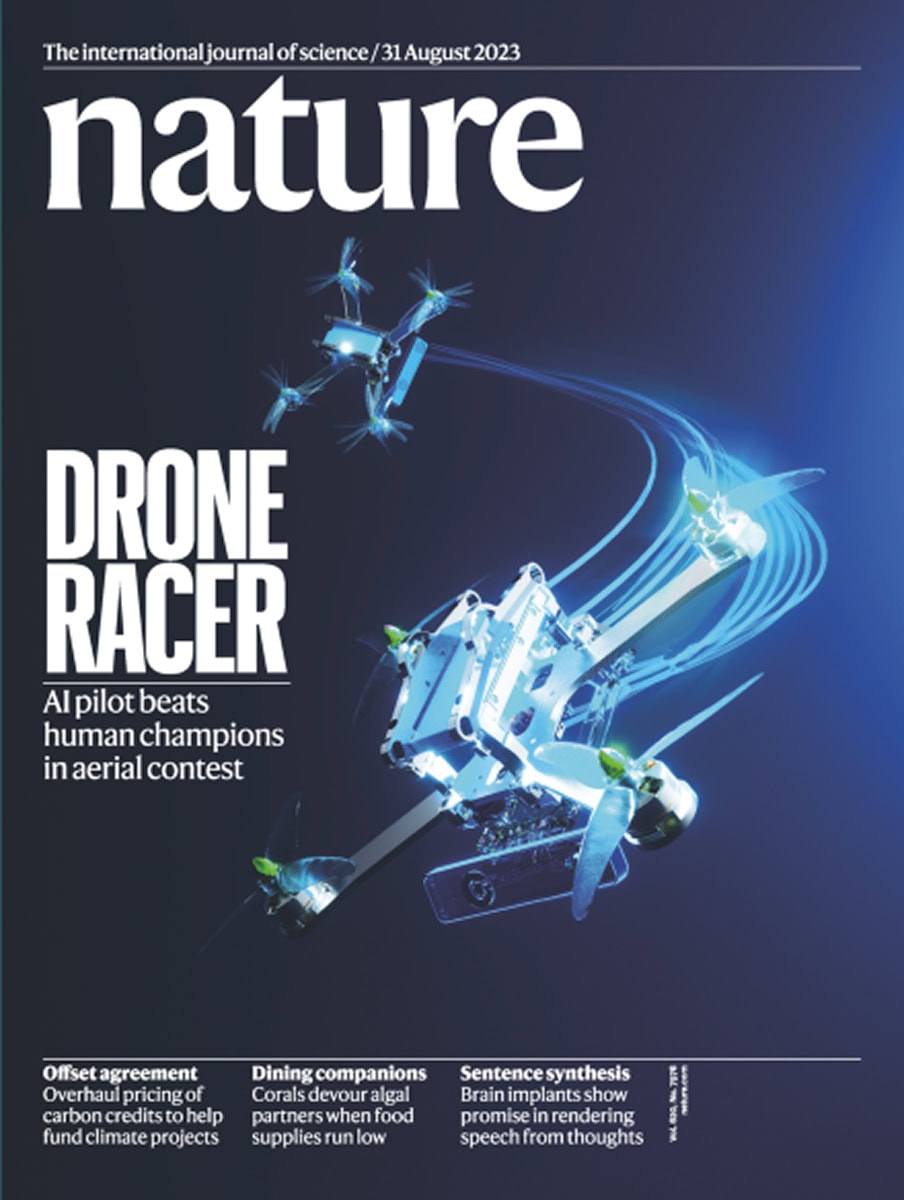
253-electrode array decoded text in real time (~78 words/min, ~25% WER) and generated personalized speech output, as well as avatar facial movements.
To the article
2021
Researchers implanted a fine-mesh electrode array in a paralyzed person with anarthria and decoded sentences directly from brain signals in real time (≈15 words/min.; word error ≈25%).
To the article
2020
Researchers tested a visual cortex prosthesis that “tracks” shapes through sequential stimulation. Blind participants recognised up to 86 shapes per minute.
To the article

Our team

We are scientists, engineers, physicians, entrepreneurs—united by a common vision.

As part of the FUTRUE Group, we have strong financial resources and a proven track record—from the first medical device for irritable bowel syndrome to the first opioid replacement analgesic for chronic pain. We turn scientific vision into clinical reality.

Clemens Fischer, MD

Founder
Mehr erfahren

Bastian Baasch, M.Sc.

Managing Director
Mehr erfahren

Max Dingler, PhD

Managing Director
Mehr erfahren

Build the futrue of medicine with us!

At FUTRUE Neurosciences, we're not working on the next small improvement—we're creating the future of medicine. Brain-computer interfaces that restore speech, movement, and emotion. Technologies that predict and prevent disease.

icon-team

We believe in the power of small A‑teams

We are convinced that a small organisation of top-performers can achieve anything.
icon-excellence

We strive for excellence

We hold ourselves to the highest standards in everything we do.
icon-persistence

We embrace persistence

We believe persistence drives achievement. We refuse to accept "no" as an answer.
icon-search

We uphold full transparency

We speak up and voice clearly our opinions.
icon-improvement

We continuously improve ourselves

We consistently question ourselves and challenge our views with credible people.
icon-safety

We act with integrity

We stay away from anything illegal, dishonest, or immoral.

Join us!

We are looking for pioneers to join us in building the world's leading generation of brain-computer interfaces. Are you in?
Job openings